
Facebook & Instagram Ads for Clothing Brands: The Playbook
Facebook ads for a clothing brand work best as one simple system: a catalog with clean size and color variants, one or two Advantage+ sales campaigns with broad targeting, and a steady flow of clearly different creative, each concept made for a specific buyer. Judge the results on new customers and profit after returns, not on Meta’s reported ROAS.
TL;DR
- Keep the account small. One Advantage+ sales campaign for new concepts, one catalog campaign for the whole range. Meta says fewer, fuller ad sets learn faster.
- Fix the catalog first. Every size and color needs its own row, grouped under one product with
item_group_id. - Make creative for people, not formats. Try-on, styling, creator and fabric close-up ads each work for a different buyer.
- Budget for learning. An ad set needs about 50 purchases a week to settle. Work out what that costs you before you split spend.
- Read results after returns. Apparel returns run high, so platform ROAS flatters clothing more than most categories.
This playbook covers the setup we would use for a DTC clothing brand on Facebook and Instagram today. It is written for founders and marketing leads who run Meta ads themselves or manage someone who does. Everything platform-related links to Meta’s own documentation, checked on November 16, 2026.
Do Facebook ads still work for clothing brands?
Yes. Meta is still the main paid channel for most DTC clothing brands, and the way it finds buyers suits fashion well. Ecommerce brands that use Triple Whale (more than 40,000 of them) put 66.88% of their ad budgets into Meta between August 2025 and July 2026.
What changed is how you win. Since Meta’s Andromeda update, the ad system first narrows tens of millions of ads down to a few thousand candidates for each person, and it leans on the ad itself to decide who that is. For a clothing brand, the creative now does most of the targeting. We cover the mechanics in what Meta Andromeda means for fashion brands; this post is about putting it to work.
“Facebook ads” here means Facebook and Instagram together. Both run from the same Meta ad account, and Meta places each ad across Feed, Stories and Reels on both apps.
What do you need in place before you launch?
Four things: clean tracking, a synced catalog, product pages that answer fit questions, and a break-even ROAS you trust. Ads only scale what is already there; they make a broken setup fail faster.
0 of 7 done
On Shopify, the Conversions API comes with the Facebook & Instagram sales channel at no extra cost. Shopify’s data sharing settings offer three levels: Standard uses the pixel alone, which browser ad blockers can stop; Enhanced and Maximum add the Conversions API, which sends purchases server to server. Meta recommends Enhanced or Maximum.
One change to know about: checkout on Facebook and Instagram is no longer supported. Shops and product tags still work in the US, but every sale finishes on your website, so your product pages carry the conversion.
How should a clothing brand structure its Meta ad account?
Use as few campaigns as you can: one Advantage+ sales campaign for your creative concepts and one catalog campaign for your full range. Meta’s learning phase guidance is blunt about why: when you combine similar ad sets, you combine their learnings.
| Campaign | What goes in it | Why |
|---|---|---|
| Advantage+ sales (prospecting) | Your persona × angle concepts: try-on, styling, creator, founder, product close-up. Broad audience, Advantage+ placements, campaign budget | Meta reports a 9% better cost per conversion on average with Advantage+ sales campaigns |
| Catalog (ads with product media) | The “All products” set, optimized for purchase | Shows each person the products they are most likely to buy, including ones they viewed |
| Drops and seasonal pushes (optional) | A new collection or a sale, in its own campaign for a fixed window | Keeps a time-limited offer from resetting learning in your evergreen campaigns |
A few rules make this structure work for clothing:
- Don’t rebuild retargeting with exclusions. An Advantage+ sales campaign with a broad audience can reach past visitors and customers as well as new people. Instead, set up audience segments so Ads Manager reports new, engaged and existing customers separately.
- Fewer ads per ad set, more variety inside each ad. Meta’s ad volume guidance says too many ads can hurt performance, and one ad can hold up to 10 creative assets.
- Name every ad by persona and angle, for example
occasion-shopper_styling_creator-video. You will need it when you read results.
How to run each round of new concepts is its own discipline. We cover hypotheses, budgets per concept and when to call a winner in our creative testing framework for Meta and TikTok ads.
How do you set up the catalog for sizes and colors?
Give every size and color its own row with a unique id, and group them under one product with the same item_group_id. This is the part clothing brands most often get wrong, and it decides what your catalog ads show.
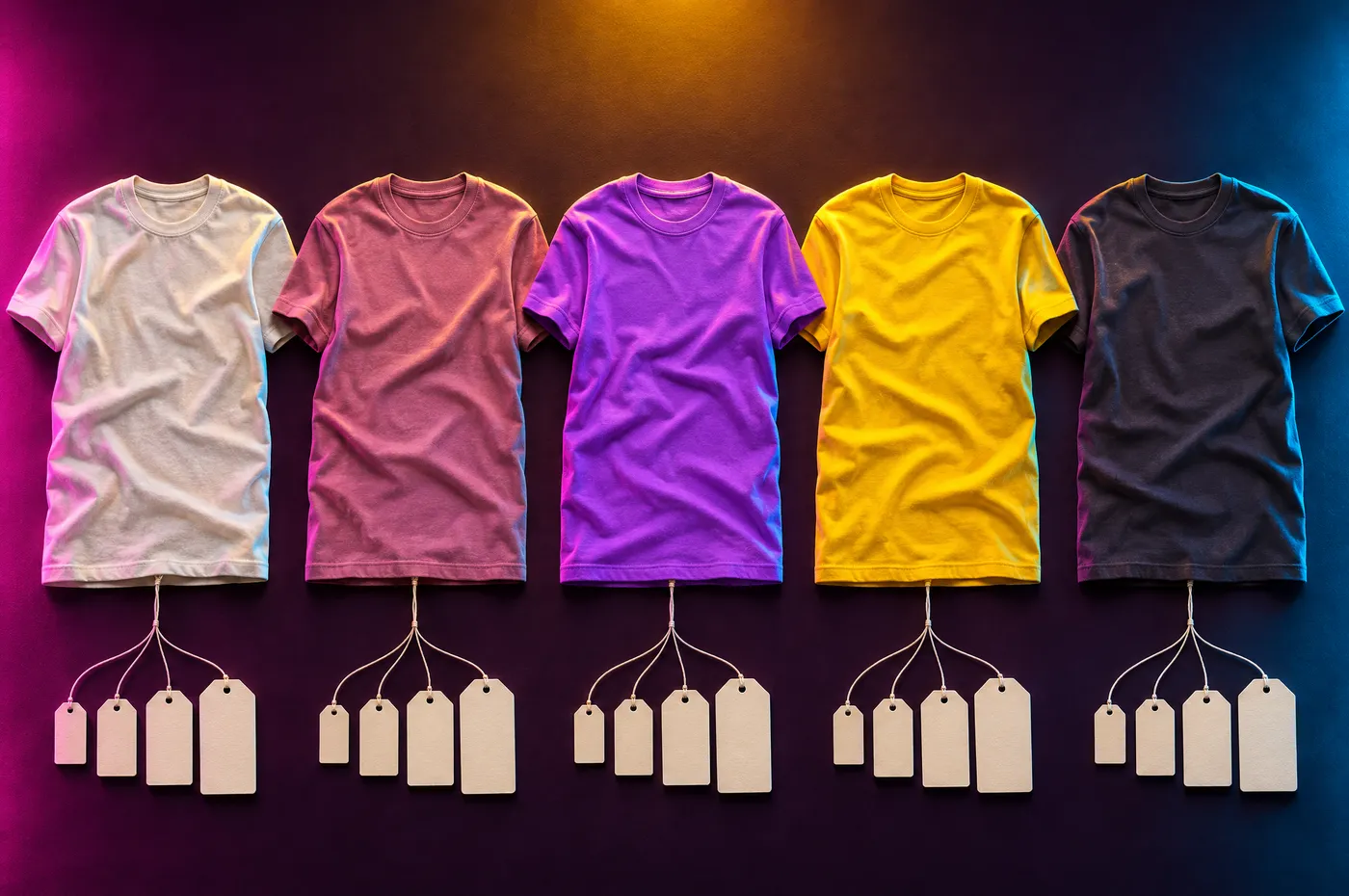
Meta’s variant guide sets the rules. The fields that matter most for apparel:
| Feed field | What to put in it | Common mistake |
|---|---|---|
id | A unique ID per size and color (usually the SKU) | Reusing one ID for every size |
item_group_id | The same ID for every variant of the product (usually the parent SKU) | Leaving it blank, so each color shows up as a separate product |
color, size | Filled in for every variant, as a unique combination | Filling size on some rows and not others |
image_link | A different main image for each color; sizes can share one | Showing the black shirt on the white variant |
link | The product page with that variant pre-selected | Sending every variant to the default color |
availability, price | Kept in sync with your store | Advertising sold-out sizes |
If you sell on Shopify, variants sync to Commerce Manager automatically, so most fixes happen in Shopify. Two more numbers from Meta’s catalog tips: aim for a catalog match rate above 75% (ideally above 90%), and use the full “All products” set unless you have a reason to limit it. Meta now calls catalog ads ads with product media, and in sales campaigns your catalog’s product data is on by default.
What creative works for clothing ads on Facebook and Instagram?
The creative that sells clothes shows the garment on a body, in motion, made for a specific buyer with a specific reason to buy. Clothing is bought with the eyes, so the format matters less than who the ad is for and why they would want it.
We plan creative as a persona × angle matrix: the same product, different buyers, different reasons. Here is what that looks like for a womenswear brand:
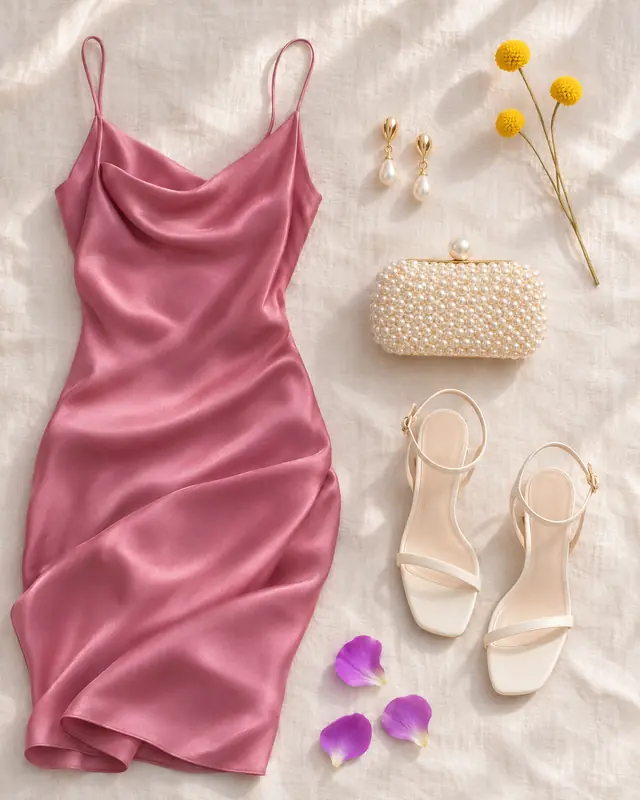


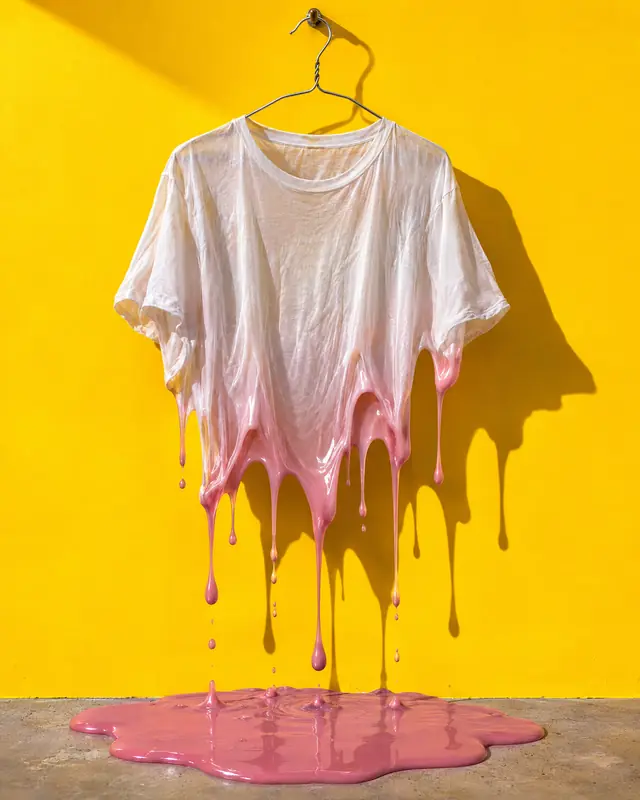
Illustrative ad mockups.
The formats we see work for apparel, and who each one is for:
| Format | Best for | Notes |
|---|---|---|
| Try-on and fit videos | Buyers worried about size and fit | Show two or three body types and say what size each person wears |
| Styling (“three ways to wear it”) | Occasion shoppers, higher order values | Pairs well with outfit bundles |
| Creator content as partnership ads | Trend seekers, new audiences | Partnership ads run from your account and the creator’s, using signals from both |
| Founder story | Values-led and premium brands | Works best in motion, filmed simply |
| Fabric and detail close-ups | Quality-led buyers | Macro shots of weave, stitching and drape |
| Catalog ads | Shoppers who already browsed | Your feed images become the ad, so make them good |
Specs that save rework: Meta recommends 4:5 vertical for single-image Feed ads and 9:16 for Stories and Reels, and primary text of about 125 characters with headlines of about 40. Swimwear, lingerie and activewear brands should also read Meta’s adult nudity and sexual activity policy: imagery that focuses on individual body parts gets rejected even when the product is legitimate. Frame the whole outfit.
The method behind the matrix, from persona research to iteration, is on our MoonDesk Scaling Method page.
How much should a clothing brand spend on Facebook ads?
Spend enough for each ad set to reach about 50 purchases a week, and grow from there as your break-even ROAS allows. That 50 is Meta’s own number: ad sets usually leave the learning phase after about 50 results in the week after the last significant edit.
The math is simple. Take your cost per purchase and multiply by 50. At the median cost per purchase for apparel and accessories brands on Triple Whale, $36.98, one ad set needs about $1,850 a week, or roughly $265 a day, to learn properly.
| Weekly Meta budget | What it can support | How we would run it |
|---|---|---|
| Under about $1,850 | One ad set, still learning | One Advantage+ sales campaign, two or three clearly different concepts. Read results every two weeks |
| About $1,850 to $5,000 | One or two ad sets that can leave learning | Add the catalog campaign. A new concept round every two weeks |
| Above about $5,000 | Several ad sets, room for drops | Steady concept rounds every one to two weeks, separate campaigns for drops and sales |
These thresholds use the Triple Whale median; swap in your own cost per purchase. Two more budget habits for clothing brands: change budgets in steps rather than big jumps, because Meta lists frequent budget changes as a reason ad sets fall back into learning, and keep spend steady through a drop instead of switching campaigns on and off.
What ROAS should a clothing brand expect from Facebook ads?
Expect your platform ROAS to look better than your bank account. The median Meta ROAS for apparel and accessories brands on Triple Whale was 2.24 from August 2025 to July 2026, but that number is platform-reported and counts sales before anything comes back.
Clothing comes back a lot. Coresight Research’s survey of US apparel brands and retailers put the average online apparel return rate at 24.4%, with size and fit the top reason. Apply that to the median and the picture changes:
- Platform-reported median 2.24
- After a 24.4% return rate 1.69
The second bar is our illustration: 2.24 × (1 − 0.244). Your return rate and refund policy decide your figure. Source: Triple Whale Meta benchmarks (Aug 2025 to Jul 2026); Coresight Research (2023)

To read results the way a clothing brand earns money:
- Know your break-even ROAS after returns. Our free ROAS calculator works it out from your price, costs and return rate.
- Watch new customers, not only ROAS. Audience segments show how much spend reaches people who have never bought. A high ROAS that comes mostly from existing customers measures retention; growth shows up in the new-customer numbers.
- Check blended MER weekly. Total store revenue divided by total ad spend keeps every platform honest.
- Read by persona and angle. “The occasion shopper responds to styling” is a decision you can make creative from. “Ad 14 won” isn’t.
How does seasonality change Facebook ads for clothing?
Clothing sells in seasons and drops, so plan creative and budgets around the calendar instead of reacting to it. The rule that matters most on Meta: load new concepts before a peak, because every new ad starts in learning.
| Moment | What changes for clothing brands | What we do |
|---|---|---|
| January | Returns from the holidays, self-gifting, new-year wardrobes | Exchanges-first messaging, prospecting new customers |
| Valentine’s Day and spring | Occasion dressing, gifting, new season colors | Launch spring concepts two to three weeks ahead |
| Summer events | Weddings, vacations, swim and linen | Occasion-shopper concepts, styling content |
| Back to school and fall | New wardrobes, outerwear, price comparison | Fit and value angles, fall catalog refresh |
| Black Friday to Christmas | The year’s highest demand and competition | Creative bank tested in October, loaded a week early |
Black Friday has its own playbook with 2026 dates and platform settings: Black Friday ads for fashion brands.
What mistakes do clothing brands make with Facebook ads?
The most expensive mistake is treating Facebook ads as a targeting problem when it is now a creative and catalog problem. These are the ones we see most:
- Running the lookbook as the ad. Studio campaign shots rarely stop the scroll. Show the garment on a body, in motion.
- Many near-identical ads. Ten crops of one photo give Meta nothing new. A new persona or angle does.
- Stacking narrow interest audiences. It fights how Advantage+ finds buyers and splits learning.
- Broken variants. Every color as a separate product, or sold-out sizes still advertised.
- Editing during learning. New ads, big budget changes and paused ad sets all reset it.
- Reading ROAS before returns. A size that half your buyers send back can look like a winner in Ads Manager.
- Expecting in-app checkout. It’s gone. Your product page has to close the sale.
What we do differently
We start with buyers, not formats. Before a single ad, we define the three to six personas who buy the brand for different reasons, and the angles most likely to move each one. Every concept we make tests one cell of that matrix.
We tag every ad by persona and angle, so after a few rounds we know which buyers the brand wins and which messages move them, across executions and seasons.
We read results after returns and by new versus existing customers, every week, and write the next round from what we learn. That is the MoonDesk Scaling Method: personas, angles, concepts, test, read, iterate.
The closest proof we have is footwear rather than clothing: since we started with MESSAGE Footwear in February 2026, its Shopify gross sales from February to September 2026 were 2.2× the same months of 2025.
When should a clothing brand get help with Facebook ads?
Get help when Meta has become your biggest cost and you can’t tell which buyers and messages are working. Common signs:
- Spend has grown but new-customer revenue hasn’t.
- Creative production can’t keep up with drops and seasons.
- Platform ROAS looks fine but the bank account doesn’t, usually because of returns.
- Nobody owns the catalog, so sizes and colors break every time the range changes.
If that sounds familiar, see how we run Meta ads for fashion and DTC brands, or read how we approach marketing for clothing brands across Meta, TikTok, Pinterest and Google.