
Creative Testing Framework for Meta & TikTok Ads (Fashion Brands)

Creative testing is running clearly different ad concepts against each other, with live spend, to learn which ones win buyers at a cost you can afford. A creative testing framework makes that repeatable: write a hypothesis for each persona and angle, launch distinct concepts in one clean structure, read results by persona and angle net of returns, then iterate.
TL;DR
- Test hypotheses, not ads. Every concept answers one question: will this persona buy for this reason?
- Make concepts different on purpose: a new persona, angle, visual world or format. Ten crops of one ad are one test.
- Run each test at least 7 days, the minimum Meta and TikTok both recommend, with enough spend per concept to get a fair read.
- Read by persona and angle, net of returns. “Ad 14 won” is trivia. “Occasion shoppers buy styling” is a learning you can reuse.
- Log every round. The test log is what you keep: it tells you what to make next.
What is creative testing?
Creative testing is the paid social practice of comparing ad concepts with live spend to find which ones bring buyers, and why. It isn’t a creativity test or a panel pre-test: the platform shows each concept to people, and purchases decide.
It matters more now because Meta and TikTok choose who sees an ad largely from the ad itself. Meta’s engineers wrote that increased ad diversity can drive better advertiser outcomes, and Meta says its system groups ads that share key visual and thematic attributes and treats them as variations of one creative. So each distinct concept is a new way to reach buyers, and testing is how you find out which ones work. We cover the delivery side in our guide to Meta Andromeda for fashion brands.
Why does testing ads one by one mislead you?
Because an ad-level winner tells you what won, not why, and the why is the part you can reuse. When “ad 14” wins, the cause could be the persona, the angle, the hook, the model, the format or a lucky week. You can copy ad 14. You can’t learn from it.
Three things make ad-level reads worse in fashion:
- Spend isn’t shared fairly. Meta warns that when you run too many ads at once, each ad delivers less often, and many never get a fair read.
- Winners tire. A learning outlives the ad that taught it. A winning ad doesn’t.
- Returns hide in the gap. Platform ROAS counts the sale and never sees the size that came back.
| Read by ad | Read by persona × angle | |
|---|---|---|
| What you learn | “Ad 14 beat ad 9” | “Occasion shoppers respond to styling” |
| What you make next | Another version of ad 14 | New concepts for that persona and angle |
| When the winner tires | Start over | The learning stays |
| Across platforms | Doesn’t carry over | Carries to TikTok, Pinterest and the next launch |
| Returns | Usually ignored | Read net of returns |
What does a creative testing framework look like?
A creative testing framework is a loop of six steps: personas, angles, concepts, test, read and iterate. It’s the testing half of the MoonDesk Scaling Method, our persona × angle approach to paid media, written as a process you can run every week.
-
Personas
Name the three to six kinds of customer who buy your product for different reasons.
OutputPersona sheet
-
Angles
For each persona, rank the reasons to buy most likely to move them. Write a hypothesis per cell.
OutputPersona × angle matrix
-
Concepts
Turn the strongest cells into ads that differ in persona, message, visual world and format.
OutputConcept briefs
-
Test
Launch in one consistent structure, with the persona and angle tagged in every ad name.
OutputA row in the test log
-
Read
Compare results by persona and angle as well as by ad, net of returns.
OutputOne written learning
-
Iterate
New executions for winners, cut the losers, write the next hypotheses.
OutputNext round of the matrix
Then the next round starts at step 03, with sharper hypotheses.
Write a hypothesis for every cell
Every concept starts as one sentence you can prove wrong. Meta’s A/B testing guidance and TikTok’s Split Test best practices both say to choose a hypothesis before you test. Ours always names a persona and an angle:
We believe [persona] will buy when we show [angle], because [evidence from reviews, surveys or comments]. We’ll call it after [spend or days] on [net cost per purchase].
Make concepts that differ on purpose
A concept changes at least the persona or the angle, and usually the visual world and format too. TikTok says the same about its own tests: set up test groups with large differences, or the system can’t pick a winner. New crops, colors and headlines are variations. They’re for extending a winner later, not for finding one.
Design the round so concepts share one thing in pairs: two angles for the same persona, or the same angle for two personas. That’s what lets the read separate “who” from “why”.
Name every ad so you can read it later
Tag each ad with its persona, angle, format, hook and round, in that order. Then a filter or breakdown in Ads Manager rolls ads up into personas and angles in seconds:
occasion_wear3ways_creator-video_h2_r04
capsule_madetolast_macro-static_h1_r04
Which test structure should you use on Meta, TikTok and Google?
For most rounds, launch concepts inside your main broad or Advantage+ structure and read them by tag; use a dedicated test when a concept needs a guaranteed fair share. Each platform has its own tool:
| Option | How it works | Use it for | Watch out for |
|---|---|---|---|
| Concepts in your main campaign | New concepts join a consolidated, broad ad set | Most weekly rounds | Delivery decides the spend split; some concepts get little |
| Meta creative test | 2 to 7 test ads inside an existing campaign, with delivery given to the test ads; learnings stay | New concepts you want guaranteed delivery for | Highest volume bid strategy only; Meta suggests no more than 20% of budget; no confidence level reported |
| Meta A/B test | Splits the audience so nobody sees both versions | Big bets: a new persona, offer or format | One variable; at least 7 days |
| TikTok Split Test | Two ad groups, equal audience split, winner declared at 90% confidence | Big creative questions on TikTok | Aim for 80%+ estimated power; don’t edit mid-test |
| Google PMax asset experiment | Asset set A vs B in one asset group | Testing a concept on Google | Google recommends 4 to 6 weeks |
Don’t use dynamic creative as your test. Meta says dynamic creative reports aggregate performance across all variations, so it isn’t a substitute for split testing, and since June 2024 it may not be available for new Sales ad sets. It mixes assets within one concept; it can’t tell you which concept won. If you’re setting up Meta from scratch, our Facebook and Instagram ads playbook for clothing brands covers the account structure.
How much should you spend on a creative test, and for how long?
Run every test at least seven days, with enough spend for each concept to collect a meaningful number of purchases. Here’s what the platforms say:
| Platform | Recommended test length | Spend guidance |
|---|---|---|
| Meta | At least 7 days, up to 30 for A/B tests | Ad sets usually need about 50 results in the week after the last significant edit |
| TikTok | Minimum 7 days, up to 60 | A budget that gives at least 80% estimated power |
| 4 to 6 weeks for PMax asset experiments | Set by Google’s experiment guidance |
Our rule of thumb (a MoonDesk working rule, not a platform rule): size the round from your cost per purchase. At $40 per purchase, Meta’s guideline of about 50 events a week means roughly $2,000 a week for an ad set to settle. If that’s out of reach, test two or three concepts properly rather than eight badly. Get your break-even cost per purchase from our ROAS calculator first.
What “significant” means in practice: Meta’s creative test tool says plainly that a confidence level is not included; TikTok’s split test declares a winner only at 90% confidence. When a tool gives no confidence figure, we call a winner only when the gap holds for the whole planned window and is large enough to change what we make next. A lead built on a handful of purchases is noise.
How do you read results by persona and angle?
Roll ad results up to their persona and angle tags, then compare the groups on net revenue, not platform ROAS. Our read, every week:
- Check it was a fair test. Did each concept get spend, impressions and full days live? A concept stuck in review for two days has no result yet.
- Roll up by tag. Persona totals, angle totals, then the cells.
- Read the funnel. Hook rate, hold rate and click-through tell you where a concept broke. Net cost per purchase decides whether it won.
- Take out returns. Pull returns by product from Shopify and set them against each concept’s sales. A fit-led concept that sells the wrong size can win on ROAS and lose money.
- Write one sentence. “Occasion shoppers buy styling on Meta; fit messaging works for every persona.” That line goes in the log.
Creative test log template
The test log is where learnings compound. One row per concept per round. Download the test log template (CSV), or copy the columns:
| Round | Hypothesis | Concept and setup | Result and learning |
|---|---|---|---|
| R04 | Occasion shopper × wear it three ways | “One dress, three weddings” · creator video · main campaign · 7 days | Win, lose or inconclusive, net of returns. One sentence, then scale, iterate, cut or retest |
Worked example: one linen dress, three personas
This is a hypothetical example to show the mechanics. The brand, concepts and ads are illustrative, and there are no results.
A brand sells one linen midi dress. Research turns up three personas (occasion shopper, capsule minimalist, conscious buyer) and three angles (wear it many ways, made to last, fit confidence). That’s nine hypotheses. The first round launches four, chosen so they overlap in pairs:
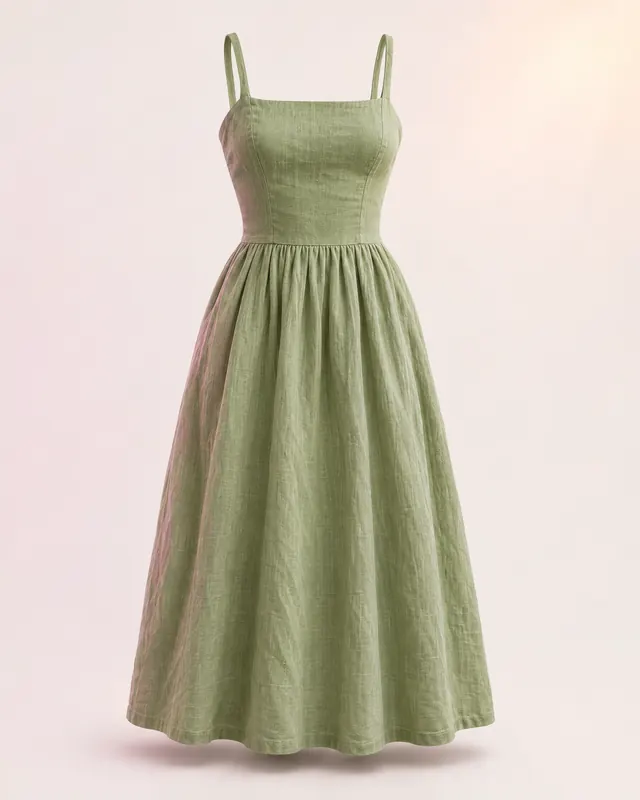
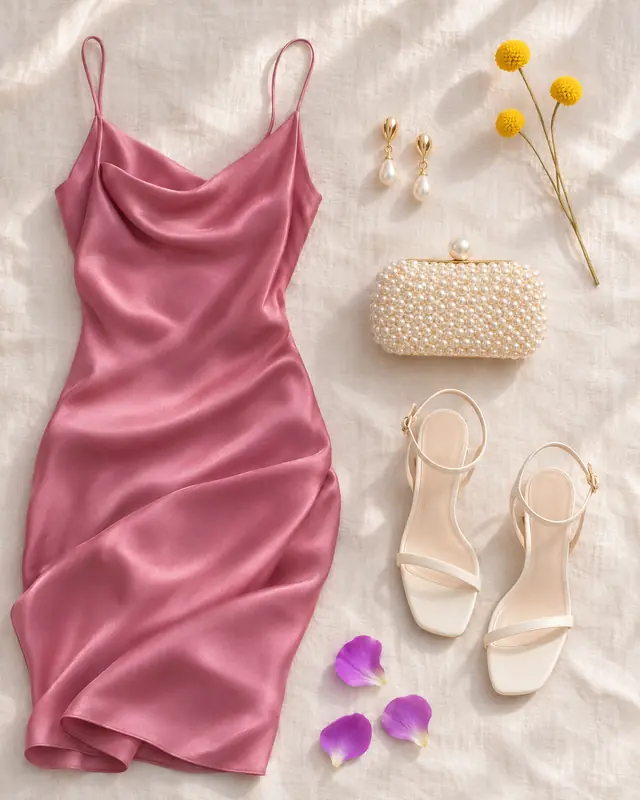
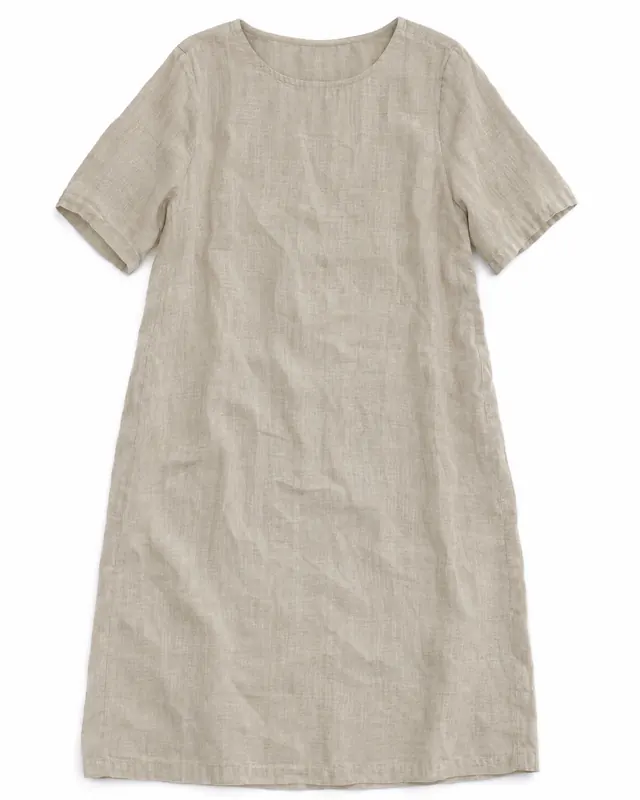
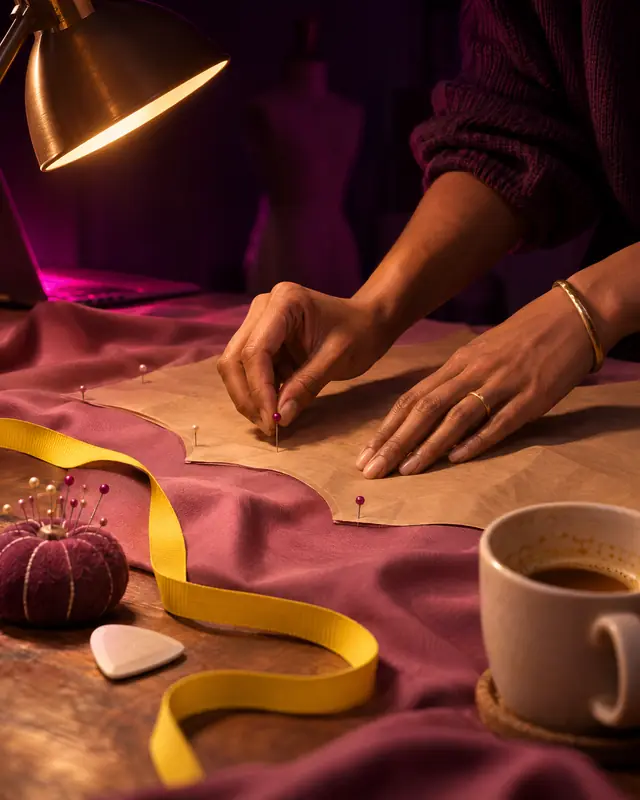
Illustrative ad mockups.
How the read works when the round ends:
| If this happens | It tells you | Next round |
|---|---|---|
| A wins, B loses | For occasion shoppers, styling beats fit | New styling executions for occasion shoppers |
| A and C both win | “Wear it many ways” works across personas | Try the angle on the conscious buyer |
| A wins, C loses | The persona drives it, not the angle | Test new angles for the capsule minimalist |
| D wins on ROAS but returns run high | Check the product pages and size guidance before scaling | Retest after the fix, read net |
What are the most common creative testing mistakes?
The most common mistake is testing variations and calling it concept testing. These are the ones we see most:
- Ten versions of one idea. Same persona, same angle, new crops. It’s one test split ten ways.
- Calling it early. Two good days is not a result. Set the end date before launch.
- Editing mid-test. On Meta, changing the creative or adding a new ad sends the ad set back into learning; TikTok says avoid making changes once a split test runs.
- Starving every concept. Too many concepts for the budget means none gets a fair read.
- Reading by ad only. Without persona and angle tags, nothing carries into the next brief.
- Ignoring returns. Gross ROAS flatters concepts that sell the wrong size.
- Not writing it down. Without a log, someone runs the same test again in six months.
How MoonDesk runs creative testing
Every account runs on the same loop: a persona × angle matrix, a new round of distinct concepts every one to two weeks, every ad tagged, and a weekly read by persona and angle, net of returns. It’s how we work for MESSAGE Footwear, whose Shopify gross sales from February to September 2026 were 2.2× the same months of 2025. See the full MoonDesk Scaling Method or our Meta ads management for DTC brands.